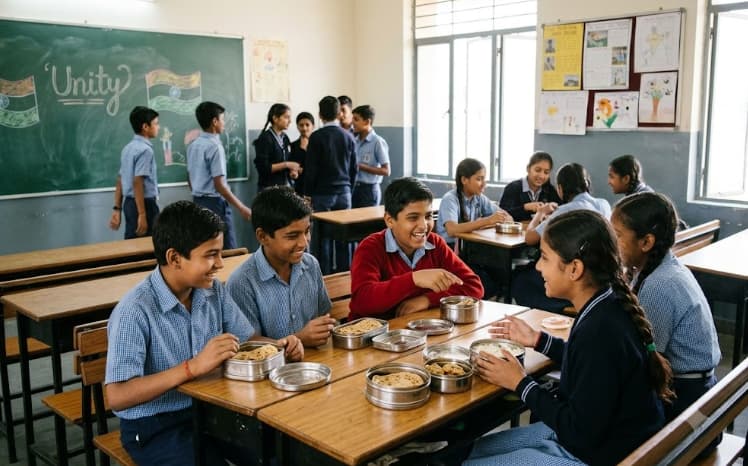
Why National Unity Day Matters
This is also why National Unity Day matters. It is observed on 31 October, the birth anniversary of Sardar Vallabhbhai Patel, who was born in 1875.
When India became independent in 1947, it had more than 560 princely states along with the provinces that had been under British rule. Sardar Patel, who became India’s first Deputy Prime Minister and Home Minister, worked with the rulers of these states and persuaded most of them to join the Indian Union. Because of his efforts, India took the shape we know today. Since 2014, the government has observed his birthday as National Unity Day, or Rashtriya Ekta Diwas.
I like to think about what he started and what we continue. He helped join the map, but keeping people together is a daily job. India has many languages, religions, foods, clothes, and festivals. This is not a problem to be fixed; it is what makes the country interesting. Unity does not mean everyone becomes the same. It means we can be different and still feel like one family.
What Can We Do in School?
What does national unity look like in daily life? Here are a few things I believe in:
- Speak with Respect: Never make fun of anyone’s accent, food, clothes, name, or family. A joke that makes one person laugh and another feel small is not really a joke.
- Include Others: If we see someone being teased or left out, we can sit with them or ask them to join our game. We do not need to be dramatic about it—sometimes simply standing near a person helps.
- Speak Up Against Bullying: If unfair treatment continues, telling a teacher or another trusted adult is the right thing to do. It is not “complaining”; it is helping someone who needs it.
- Share and Support: Help each other with studies. Sharing notes with a classmate who missed a lesson, or explaining a sum patiently, takes only a few minutes.
- Celebrate Shared Joy: When a friend celebrates a festival we do not observe, ask about it with real interest and wish them with a warm smile.
Small habits like these slowly change how a classroom feels. Discrimination can be hard to notice because it often hides in ordinary words and habits. It is useful to stop and ask: “Would I like to be spoken to like this?” If the answer is no, we should change how we speak.
Conclusion: Starting Small
I would like to see an India where nobody feels they have to hide where they come from. I want a country where a child can speak their own language, eat their own food, and still be welcomed everywhere.
That may sound like a big dream, but it starts at the school gate and in the classroom. I cannot do everything, but I can choose how I treat the people around me. And I hope that, together, we choose well.