National Unity Day: The Strength of a United India
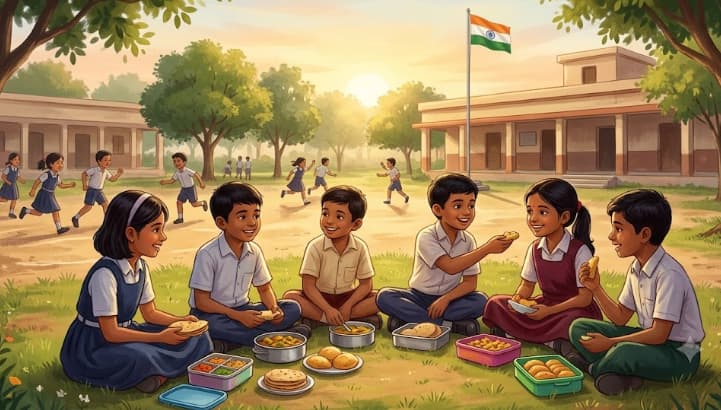
Picture a school playground at lunch break. A game of kho-kho is in full swing. One child has brought aloo paratha, another has idli, and a third has rice with fish curry. Nobody is thinking about that. They share, argue over a missed turn, laugh, and play on. No one asks where a friend’s family comes from before passing the ball.
This small scene shows what National Unity Day is about. It is observed on 31 October every year to remind us that India is strongest when its people stand together.
Why 31 October?
This date is the birth anniversary of Sardar Vallabhbhai Patel, who was born in 1875 in Gujarat. The Government of India began observing it as National Unity Day, or Rashtriya Ekta Diwas, in 2014.
To understand why he is remembered, think about India in 1947. When the British left, the country was not one neat block on the map. Besides the British-ruled provinces, there were more than 560 princely states, each with its own ruler. If they had all gone their separate ways, India might have broken into many pieces.
Sardar Patel, India’s first Deputy Prime Minister and Home Minister, worked to prevent that. He spoke patiently with the rulers and, for the most part, persuaded them to join the Indian Union. That is why he is remembered as the man who helped give India its shape. The Statue of Unity in Gujarat, one of the tallest statues in the world, honours him.
Unity in Everyday Life
Sardar Patel joined states on a map. Today, unity lives in ordinary things.
Think about our languages. The Constitution lists 22 of them, and people speak many more across the country. Think about festivals. Diwali, Eid, Christmas, Pongal, Bihu, Onam, and Gurpurab are celebrated in different ways, yet neighbours often visit each other and swap sweets. Think about food and clothes: dosa, litti chokha, momos, sarees, dhotis, lungis, and kurtas. Each one tells a story about a place and its people.
Unity does not mean everyone looks, speaks, or eats the same way. It means we respect each other’s ways and still feel like one family. It also shows in friendships that cross religion, region, and language. And it shows when people help each other. After a flood or another disaster, volunteers and donations often arrive from far-away states. The helpers rarely ask who the victims are. They only ask what is needed.
What Can Students Do?
We cannot all build statues or sign agreements, but we can do small things in our daily lives:
- Learn a greeting in a classmate’s mother tongue.
- Sit next to someone new at lunch.
- Never tease anyone about their accent, food, clothes, or family.
- Share notes with a friend who missed class.
- Join in each other’s festivals, and say thank you when someone includes you.
- If someone is being left out, include them or tell a teacher.
None of this is hard. It only needs us to notice the people around us.
Conclusion
Go back to that kho-kho game. Nobody in it signed a pledge or gave a speech. They simply played together, and that was enough.
India’s unity is made of moments like this, repeated thousands of times a day in classrooms, streets, and homes. Sardar Patel did his part long ago. Ours is happening now, in the way we speak, share, and stand beside each other. A country is held together not only by its borders, but by the daily choices of those who share it.